 Pin it
 My kitchen smelled like autumn for three days straight after I first made this minestrone, the kind of smell that lingers in your hair and on your sweaters. A friend had dropped off a box of butternut squash from her garden, more than I knew what to do with, and I found myself staring at it while the first real chill hit the air. This soup emerged from that moment of necessity and curiosity, and it became the thing I make whenever someone needs feeding, whenever the world feels a bit too much, whenever soup weather arrives.
I made this for my neighbor who was recovering from surgery, and watching her eat it with real appetite for the first time in weeks felt like witnessing something small but sacred. She asked for the recipe, then her daughter asked, and now it's become this quiet thing that shows up at doors in our building when someone needs nourishment. That's when I knew it wasn't just soup.
Ingredients
- Olive oil: Two tablespoons is your foundation, the thing that keeps everything from sticking and builds flavor as those first vegetables soften.
- Yellow onion, carrots, and celery: This holy trinity is called soffritto, the aromatic base that makes the whole pot taste intentional and balanced.
- Garlic cloves: Three cloves minced fine so they disappear into the broth and perfume the entire pot.
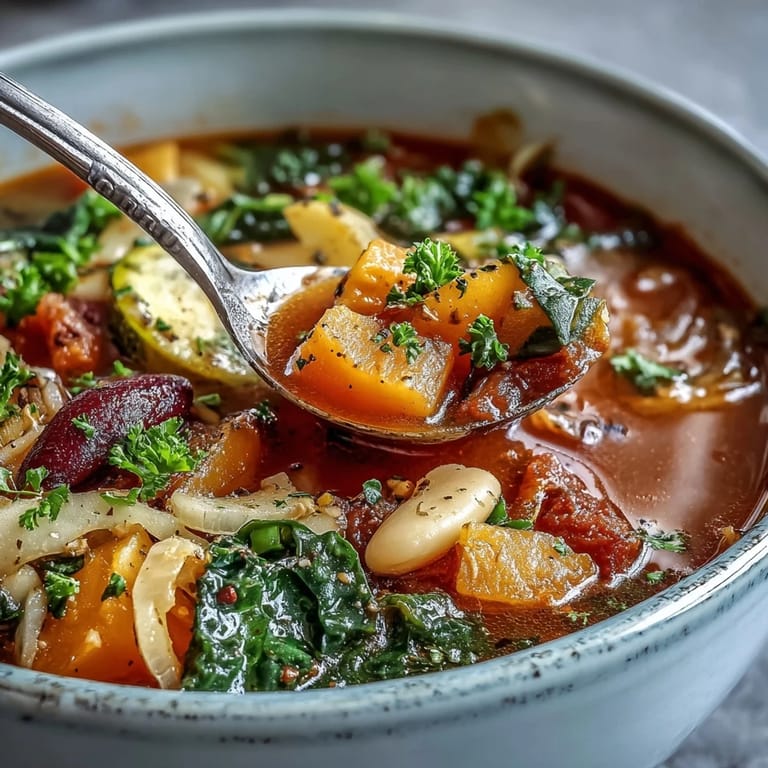
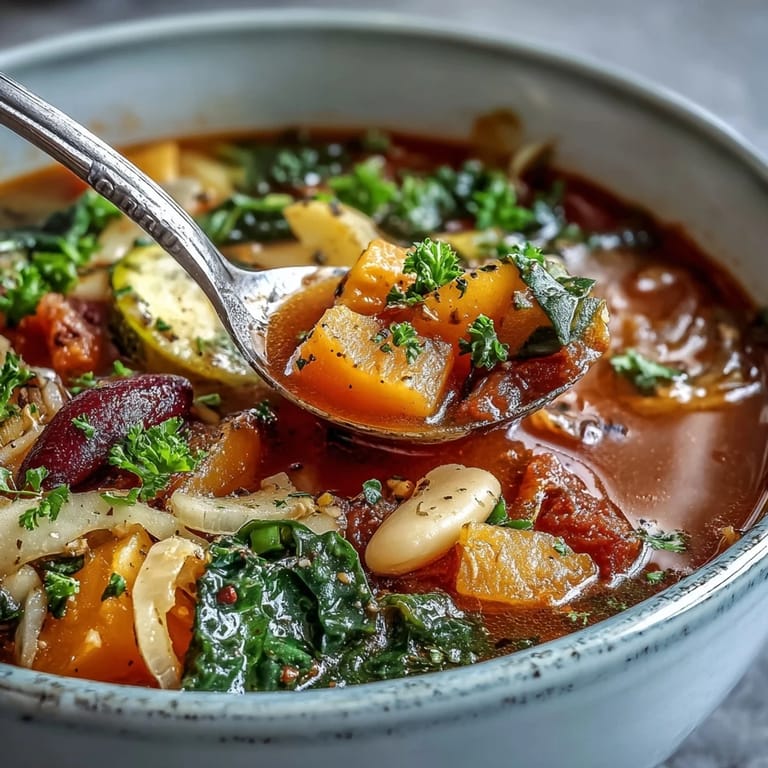
- Butternut squash: Three cups cubed gives you sweetness and substance, and the way it softens creates a subtle creaminess without cream.
- Zucchini: One medium zucchini adds texture and brightness, though it can become invisible if you're not watching.
- Canned diced tomatoes: Use the good kind if you can, the ones that still taste like summer even in February.
- Kale: Four cups chopped and destemmed is your final flourish, turning this from good to nourishing.
- Cannellini beans: One drained can adds protein and creates little moments of creaminess throughout.
- Small pasta: Ditalini or elbow macaroni, one cup, should soften right alongside everything else without disappearing.
- Vegetable broth: Six cups of good quality broth is what separates this from just vegetables in water.
- Dried oregano, thyme, and rosemary: These three herbs together create that unmistakable Italian herb blend that tastes both humble and thoughtful.
- Bay leaf: One leaf that you must remember to fish out before serving, or keep a mental note so you don't find it in someone's spoon.
- Salt and pepper: Added at the end so you can taste as you go and season the way only you know how.
Tired of Takeout? 🥡
Get 10 meals you can make faster than delivery arrives. Seriously.
One email. No spam. Unsubscribe anytime.
Instructions
- Build the soffritto:
- Heat your olive oil in a large pot over medium heat and add the diced onion, carrots, and celery all at once. Let them soften for about five minutes, stirring occasionally so nothing catches on the bottom, until they're starting to turn translucent and smell incredible.
- Wake up the garlic:
- Stir in your minced garlic and listen for that soft sizzle as it hits the hot vegetables, cooking just until fragrant, which takes about one minute. This is the smell that makes people ask what you're cooking before they even walk in the door.
- Add the squash and zucchini:
- Toss in your cubed butternut squash and diced zucchini, stirring everything together and letting it cook undisturbed for another five minutes. The squash will start to pick up some color where it touches the hot pan.
- Pour in the broth and tomatoes:
- Add your diced tomatoes with their juice, the full amount of vegetable broth, and your bay leaf, then sprinkle in the oregano, thyme, and rosemary. Bring the whole thing to a boil, letting the heat wake up those dried herbs so they release their flavor into the liquid.
- Simmer the squash tender:
- Once it's boiling, reduce the heat to a gentle simmer, cover the pot, and let it bubble quietly for about fifteen minutes. The squash will turn completely soft, breaking down slightly at the edges and creating a subtle sweetness throughout the broth.
- Add the final elements:
- Stir in your drained cannellini beans, the small pasta, and all your chopped kale at once, removing the lid so the pasta can cook properly. Simmer uncovered for ten to twelve minutes, stirring occasionally, until the pasta is tender and the kale has softened and turned a darker green.
- Taste and season:
- Fish out that bay leaf, then taste a spoonful of broth and season generously with salt and pepper until it tastes like something you'd want to eat. Remember that the garnishes might add more salt, so hold back slightly.
- Serve with care:
- Ladle the soup into bowls, letting the vegetables settle so each spoonful feels balanced and complete. Top with Parmesan and fresh parsley if you like, and serve alongside crusty bread for soaking up the last of the broth.
 Pin it
  Pin it
 There's a moment, usually on the second day, when you reheat a bowl of this soup and realize the flavors have deepened and merged together in a way they hadn't the night before. That quiet transformation is why this recipe became a keeper, why it shows up in my kitchen year after year when the air turns cold and the days grow short.
Variations Worth Trying
Once you've made this version a few times, you'll start to see how flexible it is. Swap the butternut squash for sweet potato if that's what you have, or add a diced fennel bulb for a subtle anise note that no one can quite identify but everyone notices. In spring, I've substituted the kale for fresh spinach and added diced asparagus, turning it into something lighter that still feels nourishing.
Making It Your Own
The beauty of minestrone is that it's a blueprint, not a prison. Some versions add white beans instead of cannellini, others skip the pasta entirely and load up with even more vegetables. The herbs can shift depending on what's in your cabinet: thyme is essential, but oregano and rosemary can be adjusted to your taste.
Storage and Make-Ahead Tips
This soup keeps beautifully in the refrigerator for up to four days, and freezes well for up to three months if you freeze it before adding the pasta. The flavors actually settle and become more cohesive as it sits, so making it the day before serving isn't just convenient, it's an improvement.
- Cook the pasta separately and add it to individual bowls if you're storing the soup for more than a day, so it doesn't turn soft and absorb all the broth.
- Let the soup cool completely before covering and refrigerating, or the condensation will make it watery.
- Reheat gently on the stovetop over medium heat, adding a splash more broth if it's thickened too much, rather than blasting it in the microwave.
 Pin it
  Pin it
 Make this soup when you need comfort, when you want to feed someone without fussing, when the season changes and your body remembers that warm bowls heal in ways medicine sometimes can't. It's the kind of dish that becomes part of how you take care of yourself and the people around you.
Recipe FAQs
- → Can I make this minestrone ahead of time?
Yes, minestrone actually tastes better the next day as the flavors meld together. Store in an airtight container in the refrigerator for up to 4 days. Note that the pasta will absorb liquid, so you may need to add extra broth when reheating.
- → What can I substitute for butternut squash?
Sweet potato, pumpkin, or acorn squash work wonderfully as alternatives. They offer similar sweetness and texture. Cut them into similar-sized cubes to ensure even cooking throughout the soup.
- → How do I prevent the pasta from getting mushy?
Cook the pasta just until al dente, as it will continue to soften in the hot broth. If making ahead, consider cooking the pasta separately and adding it to individual bowls when serving to maintain the best texture.
- → Can I freeze winter minestrone?
Yes, but it's best to freeze it without the pasta. Freeze the soup base for up to 3 months, then add freshly cooked pasta when reheating. This prevents the pasta from becoming overly soft and mushy after thawing.
- → What other greens work well in this soup?
Spinach, Swiss chard, or escarole are excellent alternatives to kale. Spinach wilts quickly, so add it in the last 3-4 minutes of cooking. Swiss chard and escarole have textures similar to kale and can be added at the same time.
- → How can I make this minestrone heartier?
Add an extra can of beans, increase the pasta amount, or include diced potatoes with the butternut squash. You can also stir in cooked Italian sausage for a non-vegetarian version that adds protein and rich flavor.