 Pin it
 Standing at the fish counter last summer, watching the salmon being sliced with such precision, I realized poke bowls are essentially deconstructed sushi you get to build yourself. My husband and I had just returned from Honolulu where we'd eaten our weight in ahi poke, and I was determined to recreate that magic at home. The beauty of poke is how forgiving it is, perfect for those nights when you want something fresh but don't want to turn on the oven.
Last Friday my sister came over for dinner, skeptical about eating raw fish at home. I watched her face light up when she took that first bite, the marinated salmon melting together with creamy avocado and that kick of spicy mayo. By the end of the meal, she was already planning her own poke bowl party, texting her friends about how impressive yet effortless this dinner felt.
Ingredients
- Sushi grade salmon or tuna: This is non negotiable for safety and quality, ask your fishmonger specifically for sushi grade
- Soy sauce: The backbone of the marinade, I use low sodium so I can control the salt level
- Sesame oil: Toasted sesame oil adds that nutty depth that makes everything taste more expensive
- Rice vinegar: Essential for both the marinade and seasoning the rice, gives that characteristic subtle sweetness
- Honey or agave: Just enough to balance the salty soy sauce and create that glossy finish on the fish
- Fresh ginger: Grating it yourself makes a huge difference, the pre jarred stuff has none of the bright zing
- Sushi rice: Short grain rice becomes perfectly sticky and holds everything together, regular rice just wont do
- Avocado: Needs to be perfectly ripe, give it a gentle press, it should yield slightly but not feel mushy
- Cucumber and carrots: The crunch factor is crucial, I use a vegetable peeler to make ribbons instead of julienne
- Edamame: Adds protein and a pop of color, buy them shelled to save time
- Spicy mayo: Mixing your own means you control the heat, I start with one teaspoon sriracha and go from there
Tired of Takeout? 🥡
Get 10 meals you can make faster than delivery arrives. Seriously.
One email. No spam. Unsubscribe anytime.
Instructions
- Get your rice going first:
- Rinse the rice until the water runs clear, this removes excess starch for perfectly separate grains, then simmer it covered for exactly 15 minutes before letting it steam undisturbed
- Marinate the fish:
- Whisk together your marinade ingredients until the honey dissolves completely, then gently fold in the diced fish and let it sit for 10 to 15 minutes, turning it halfway through
- Prep your toppings:
- Slice all your vegetables while the fish marinates, keeping the avocado for last so it doesnt oxidize, and arrange everything in separate little bowls for easy assembly
- Season the rice:
- Fold the vinegar mixture through the warm rice, using a slicing motion to avoid mashing the grains, then let it cool to room temperature so it doesnt wilt the toppings
- Build your bowls:
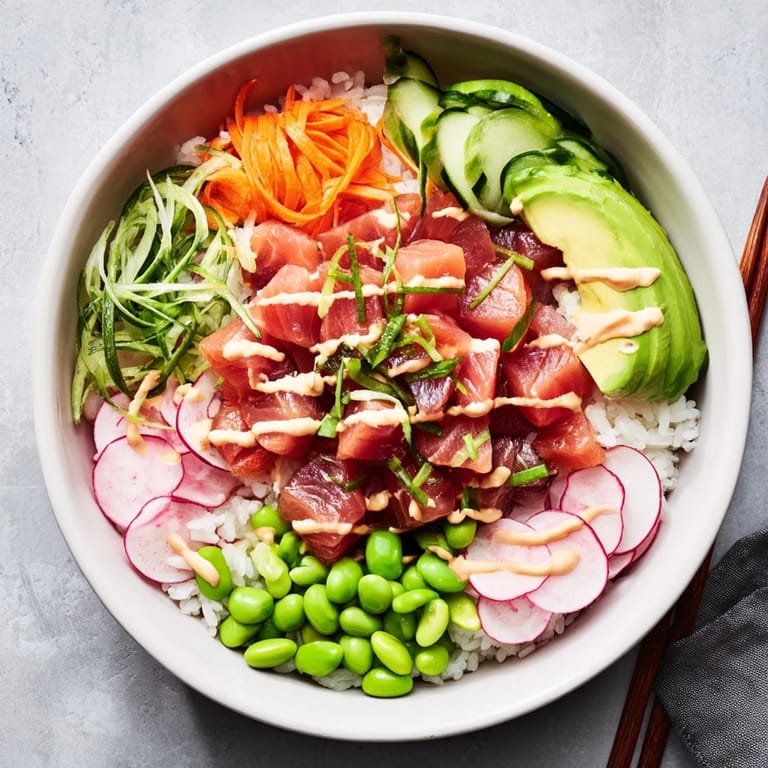
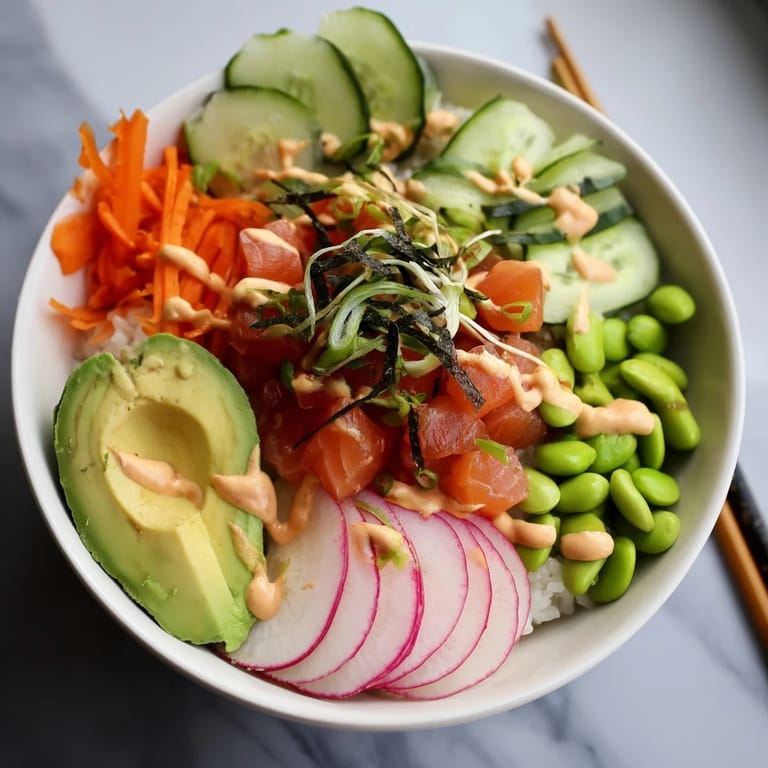
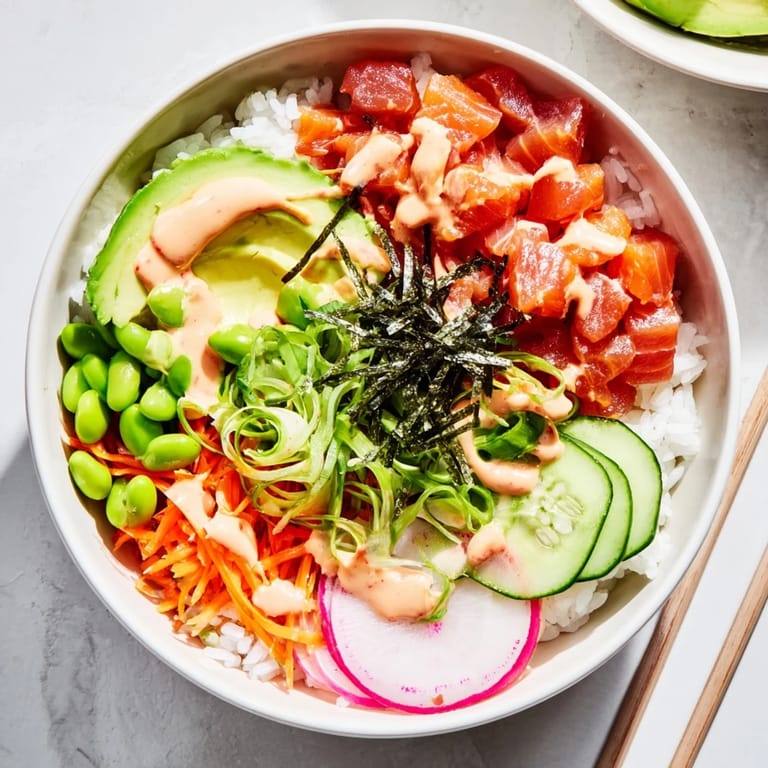
- Start with a base of rice, arrange your fish and toppings in sections like a clock face, drizzle generously with spicy mayo, and serve immediately with extra soy sauce on the side
 Pin it
 This recipe has become my go to for summer dinners, something about eating with chopsticks and the variety of textures makes every meal feel like a tiny vacation. Last week I made it for book club and we all sat around the table, building our bowls and sharing stories about our travels, completely forgetting about the book itself.
Choosing Your Fish
I've learned the hard way that not every piece of salmon from the grocery store is meant to be eaten raw. Sushi grade means it's been flash frozen at specific temperatures to kill parasites, so don't skip this step. If your fish counter looks at you blankly when you ask for sushi grade, go to a specialty market or order online. The texture of fresh, properly handled fish versus something that's been sitting out is night and day.
Rice That Actually Sticks
The first time I made poke bowls, I used jasmine rice because that's what I had in the pantry, and everything just slid around the bowl. Short grain sushi rice releases starch when cooked, creating that perfect sticky texture that holds the toppings together. Rinse it until the water runs clear, use slightly less water than you think you need, and don't skip the vinegar seasoning step.
Assembly Like a Pro
Restaurant poke bowls always look stunning because they treat the ingredients like little works of art. Take your time arranging each topping in its own section, think about color contrast, and don't be afraid to let some ingredients spill over into each other. The final drizzle of spicy mayo and those toasted sesame seeds aren't just garnish, they're what pulls everything together.
- Warm bowls make a difference, I run mine under hot water before assembling
- Leftover components keep separately for lunch the next day, just don't dress until you eat
- A squeeze of fresh lime right before serving brightens every single flavor
 Pin it
 There's something deeply satisfying about eating food this vibrant and fresh, it makes you feel like you're doing something right for your body without sacrificing an ounce of flavor. Start with this recipe, then make it your own, because the best poke bowl is the one you build yourself.
Recipe FAQs
- → What fish works best for poke bowls?
Sushi-grade salmon or tuna are traditional choices. Look for bright, firm flesh from reputable seafood markets or specialty stores. Ahi tuna offers a mild flavor, while salmon brings richness.
- → Can I make poke bowls ahead of time?
Prepare rice and vegetables in advance, but marinate fish just before serving—15 minutes maximum prevents the texture from becoming mushy. Store components separately and assemble when ready to eat.
- → What makes a good poke bowl sauce?
A balance of savory, sweet, and acidic elements works best. Soy sauce provides saltiness, sesame oil adds nuttiness, rice vinegar brings brightness, while honey or agave balances flavors with subtle sweetness.
- → Is short-grain rice necessary?
Short-grain or sushi rice creates the authentic texture—slightly sticky and clingy—helping toppings stay put. Medium-grain jasmine works in a pinch, though long-grain varieties don't adhere as well.
- → What vegetables pair well with marinated fish?
Crisp, refreshing options like cucumber, radishes, and carrots contrast beautifully with rich fish. Avocado adds creaminess, while edamame contributes protein and a buttery bite.
- → How do I know if fish is sushi-grade?
Look for fish labeled 'sushi-grade' or 'sashimi-grade' from trusted sources. The fish should smell like the ocean—not fishy—with firm, translucent flesh and no discoloration.