 Pin it
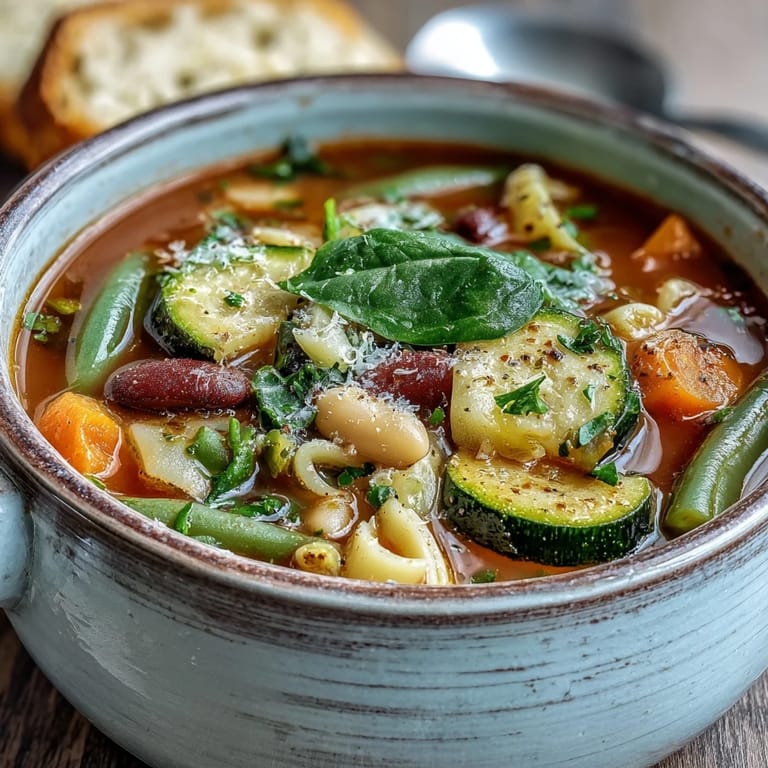
 My neighbor Marco once brought over a pot of minestrone on a gray Tuesday afternoon, and I watched steam rise from the kitchen as he stirred it thoughtfully, telling me about his grandmother's version from a small town outside Milan. The smell of simmering vegetables and herbs filled my entire apartment, and by the time we sat down with bowls in our laps, I understood why this soup had traveled across generations and oceans. It's not fancy or complicated, but there's something about the way each vegetable keeps its character while becoming part of something bigger that made me want to learn how to make it myself.
I made this for my book club once, doubling the recipe in a slightly too-small pot, and spent half the evening convinced something would boil over. It didn't, and everyone came back for seconds while debating whether Parmesan belonged in vegetarian minestrone or was somehow cheating. That night taught me that this soup brings people together in a way that feels both casual and intentional, the kind of meal where conversation flows as naturally as the broth.
Ingredients
- Olive oil: Two tablespoons is your foundation, enough to coat the pot without making the soup feel heavy or greasy.
- Onion, celery, and carrots: This trio is the aromatic backbone of every good soup, and dicing them roughly the same size helps them cook evenly.
- Garlic: Minced fine, it should smell immediately fragrant once you add it to the hot oil.
- Zucchini and green beans: These keep their slight firmness even after simmering, which adds pleasant texture to the final bowl.
- Baby spinach or kale: Either works beautifully, though kale holds its shape a bit longer if you prefer less delicate greens.
- Diced tomatoes and tomato paste: The canned tomatoes give acidity and body, while the paste deepens the tomato flavor without watering things down.
- Vegetable broth: Use the better quality kind if you can, as this soup has few ingredients and everything tastes like itself.
- Pasta: Small shapes like ditalini or elbow are traditional because they don't overwhelm the broth or get lost among the vegetables.
- Cannellini or kidney beans: These add protein and creaminess, and rinsing them removes excess sodium so you control the seasoning.
- Dried oregano, basil, and thyme: This combination is unmistakably Italian, though you can adjust to your taste preferences.
- Bay leaf: One leaf perfumes the entire pot with a subtle woodsy note that rounds out the other herbs.
- Fresh parsley: Stirred in at the end, it brightens everything with a peppery freshness that tastes alive.
Tired of Takeout? 🥡
Get 10 meals you can make faster than delivery arrives. Seriously.
One email. No spam. Unsubscribe anytime.
Instructions
- Start with the holy trinity:
- Heat your olive oil over medium heat until it shimmers slightly, then add diced onion, celery, and carrots. Let them soften for about five minutes, stirring occasionally, until the onion turns translucent and the whole pot starts to smell like a kitchen where good things are happening.
- Build the flavor:
- Add minced garlic along with zucchini and green beans, cooking for three to four minutes until the garlic stops smelling raw and the vegetables begin to release their own aromas. You'll notice the pot becoming more fragrant and alive, which is your signal that the vegetables are starting to caramelize ever so slightly.
- Establish the broth base:
- Stir in your diced tomatoes, tomato paste, vegetable broth, oregano, basil, thyme, and bay leaf, then bring everything to a rolling boil before immediately dropping the heat to a simmer. Let this bubble gently for fifteen minutes so all the flavors marry and deepen without anything scorching on the bottom.
- Add the pasta and beans:
- Pour in your small pasta and drained beans, stirring to distribute them evenly throughout the pot, then cook for ten minutes until the pasta reaches that perfect al dente state where it still has a slight resistance when you bite it. The soup will thicken as the pasta releases its starch, which is exactly what you want.
- Finish with greens:
- Stir in your spinach or kale along with fresh parsley, then let everything simmer for just two to three minutes until the greens have wilted and turned a darker, more vibrant shade. Don't let them cook much longer than this or they'll lose their brightness.
- Taste and season:
- Fish out the bay leaf, then taste carefully and adjust salt and pepper to your preference, remembering that the broth already contains some salt. A crack of fresh black pepper on top makes a real difference here.
- Serve with warmth:
- Ladle the soup into bowls, scatter more fresh parsley over the top, and serve while it's piping hot with thick crusty bread on the side for soaking up every last drop.
 Pin it
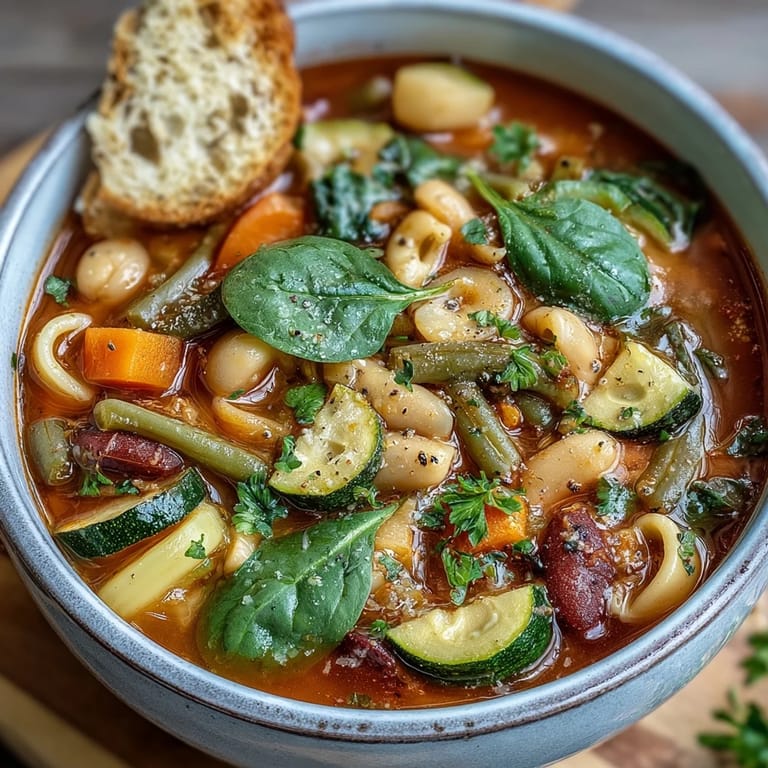
 There's a moment when the first spoonful hits your mouth and you taste how each element remains distinct while contributing to a harmonious whole, and that's when you realize why minestrone has endured for centuries. It's the kind of soup that makes you feel cared for, whether you're making it for yourself on a quiet evening or for people you love.
How to Adapt This Soup
The beauty of minestrone is that it genuinely welcomes improvisation based on what you have available or what the season offers. In summer, I add diced eggplant and fresh tomatoes when they're at their peak, while in winter I've substituted kale for spinach and thrown in diced butternut squash or parsnips with excellent results. The core ratio of aromatics, broth, beans, and pasta stays the same, but the vegetables can shift completely depending on your market haul or refrigerator contents.
Storing and Reheating
This soup keeps beautifully in the refrigerator for up to four days in an airtight container, and the flavors actually deepen overnight as everything continues to get acquainted. When reheating, do it gently over medium heat on the stovetop rather than blasting it in the microwave, and add a splash of extra broth if needed since the pasta continues to absorb liquid even after cooking.
Serving Suggestions and Variations
While this recipe stands perfectly well on its own, a few additions can transform it into something slightly more special depending on your mood and what's in your kitchen. The traditional finish includes a generous handful of freshly grated Parmesan cheese stirred right into your bowl, which adds a savory richness, though you can easily skip this for a vegan version.
- A drizzle of your best olive oil on top right before serving adds luxurious flavor and a glossy finish that looks intentional.
- Crusty bread for dunking and soaking up broth is practically essential, turning a bowl of soup into a complete meal.
- For a gluten-free version, simply swap in your favorite gluten-free pasta and verify that your broth is certified gluten-free.
 Pin it
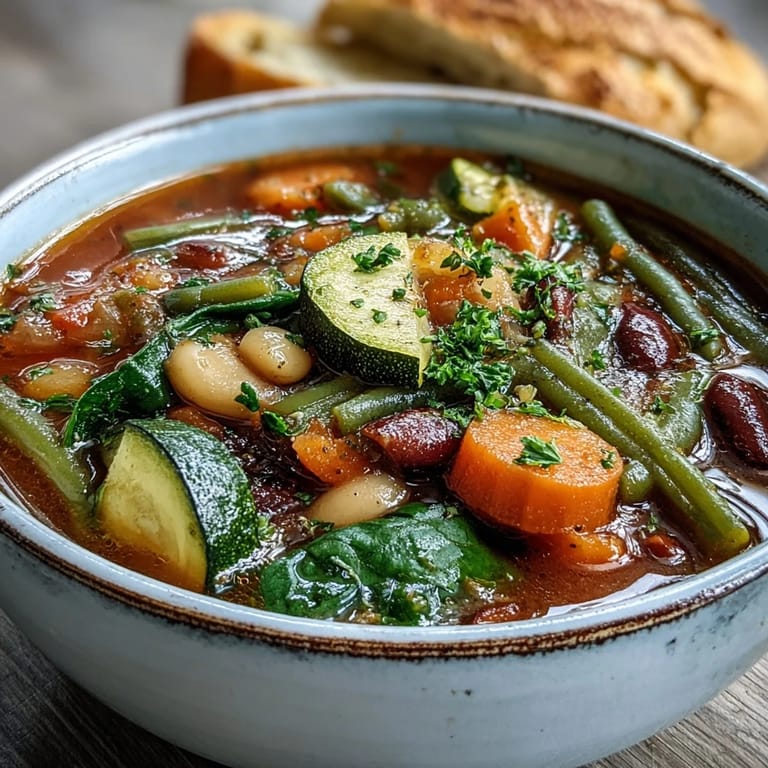
 Minestrone taught me that the most comforting meals don't require complicated techniques or hard-to-find ingredients. It's a soup that asks only for your attention and good instincts, rewarding you with bowls full of warmth and the kind of flavor that tastes like home, wherever that might be for you.
Recipe FAQs
- → Can I use different vegetables in this soup?
Yes, minestrone is very versatile. You can substitute seasonal vegetables like butternut squash, bell peppers, or cabbage based on what you have available.
- → What type of pasta works best?
Small pasta shapes like ditalini, elbow macaroni, or shells work perfectly. They cook evenly and are easy to eat with a spoon. Use gluten-free pasta if needed.
- → Can I make this soup ahead of time?
Absolutely. Minestrone tastes even better the next day as flavors meld. Store in the refrigerator for up to 4 days. Add extra broth when reheating as pasta absorbs liquid.
- → How can I make this soup heartier?
Add more beans, use larger pasta shapes, or include diced potatoes. You can also top with grated Parmesan cheese and serve with thick slices of crusty Italian bread.
- → Is this soup freezer-friendly?
Yes, but for best results, freeze without the pasta. Cook pasta fresh when reheating. The soup will keep frozen for up to 3 months in an airtight container.
- → What can I use instead of vegetable broth?
Chicken broth works well for non-vegetarian versions. You can also use water with additional tomato paste and seasoning, though broth provides richer flavor.