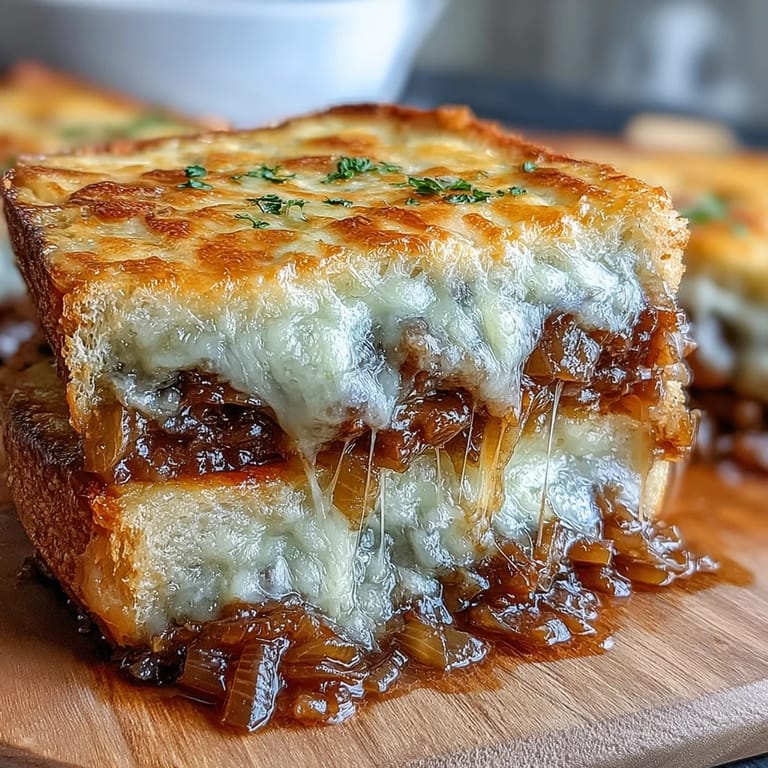
 Pin it
 There's something almost meditative about standing at the stove on a cold afternoon, watching onions transform from sharp and papery to golden and sweet. I discovered this Dutch oven method years ago when a friend casually mentioned she'd stopped fussing with separate pots and just did everything in one—and suddenly French onion soup went from intimidating to genuinely manageable. The low, gentle heat does the real work here, not you, which is perhaps the greatest secret of this classic dish.
I made this for my sister's first winter in the city, when she was homesick and the weather turned genuinely brutal. She'd taken one spoonful, closed her eyes, and said nothing for a long moment—then asked for seconds before finishing the first bowl. That's when I understood this soup isn't really about technique or ingredients; it's about creating something warm enough to make people forget what they were missing.
Ingredients
- Yellow onions, 5 large, thinly sliced: Yellow onions caramelize more reliably than other varieties, developing a deeper sweetness that carries the entire soup.
- Unsalted butter and olive oil, 3 tablespoons and 2 tablespoons: Butter alone burns too easily; the oil prevents scorching while butter adds richness.
- Garlic cloves, 2, minced: Add garlic after the onions finish caramelizing or it'll taste harsh and one-dimensional.
- Sugar, 1 teaspoon: Just enough to coax out the onions' natural sweetness without making the soup taste dessert-like.
- Beef broth, 8 cups: Vegetable broth works beautifully too, though beef creates that deep savory note that feels like home.
- Dry white wine, 1/2 cup: Don't skip this—the acidity balances the richness and adds complexity that broth alone can't deliver.
- Fresh thyme and bay leaves, 2 teaspoons and 2 leaves: These herbs quietly anchor everything; dried thyme works fine if fresh isn't around.
- Worcestershire sauce, 1 tablespoon: The umami secret weapon that makes people ask what makes your soup taste better than theirs.
- Baguette, 1, sliced 1/2-inch thick: Stale baguette actually works better than fresh—it gets crunchier and won't fall apart in the soup.
- Gruyère cheese, 2 cups, grated: The nuttiness of Gruyère is essential here; don't substitute with mild cheddar or the entire character changes.
Tired of Takeout? 🥡
Get 10 meals you can make faster than delivery arrives. Seriously.
One email. No spam. Unsubscribe anytime.
Instructions
- Melt your fats and begin the long caramelize:
- In your Dutch oven over medium heat, combine butter and olive oil, then add the sliced onions with a sprinkle of sugar. The sugar jumpstarts caramelization, but the real magic happens over 40 to 45 minutes of patient stirring—you're not rushing this, and you're definitely not walking away to check your phone.
- Let garlic whisper into the mix:
- Once onions have turned deep golden and smell almost sweet, add minced garlic and cook for exactly one minute until fragrant. Any longer and it sharpens; any shorter and it disappears.
- Deglaze with wine and memories:
- Pour in white wine and scrape the bottom of the pot with your wooden spoon to lift all those caramelized bits—they're flavor you don't want to waste. Let it simmer for a couple minutes until the raw wine taste mellows.
- Add your broth and herbs:
- Pour in the beef broth along with thyme, bay leaves, and Worcestershire sauce, then bring everything to a gentle simmer. Reduce heat and let it cook uncovered for 20 to 30 minutes so flavors meld and the soup feels complete.
- Toast the bread while soup simmers:
- Preheat your broiler and arrange baguette slices on a baking sheet, then toast them until golden and crispy on both sides—about 1 to 2 minutes per side. You want them sturdy enough to support cheese without immediately dissolving.
- Build each bowl like you mean it:
- Ladle soup into oven-safe bowls, top each with a toasted baguette slice, then pile Gruyère on generously. The cheese should almost overflow—this is not the moment for restraint.
- Broil until the cheese stage:
- Place filled bowls on a baking sheet and broil for 2 to 4 minutes until cheese is melted, bubbling, and slightly browned at the edges. Watch this closely or you'll have burnt cheese instead of perfectly melted cheese.
- Serve it warm and immediately:
- This is not soup that waits—serve it straight from the broiler while cheese is still actively bubbling and the baguette hasn't had time to go soft.
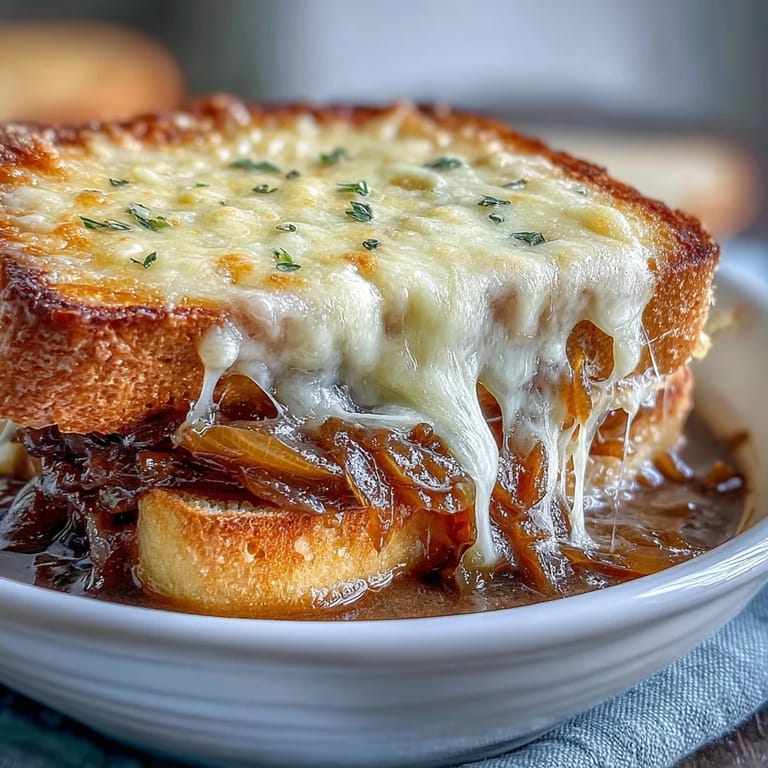 Pin it
  Pin it
 What struck me most while testing this was how something so simple—onions, broth, cheese—could taste so complete. This soup has a way of stopping conversations mid-thought, which is precisely what comfort food should do.
The Caramelization Moment
The first twenty minutes feel slow, like nothing's happening except onions sitting in fat. Then around minute thirty, something shifts—the kitchen smells different, sweeter, richer. The onions have released their moisture and begun breaking down into pure sweetness, which is exactly the point you're aiming for. This is why the Dutch oven wins: its heavy bottom distributes heat so evenly that you're never fighting burnt spots or uneven cooking. By minute forty-five, your onions should be golden, soft enough to almost dissolve with a spoon, and smelling like an entire autumn afternoon concentrated into one pot.
Wine and Deglazing Secrets
The wine does two crucial things: it cuts through the heaviness with acidity and it lifts all those browned, caramelized bits from the pot's bottom that would otherwise stay stuck. This process is called deglazing, and it's how you transfer pure flavor into your soup. Don't use expensive wine—something you'd actually drink is perfect. The Worcestershire sauce adds umami depth without making the soup taste fishy, though fair warning: it does contain anchovies, so mention this if you're serving anyone with strong feelings about that ingredient.
Cheese, Bread, and the Final Glory
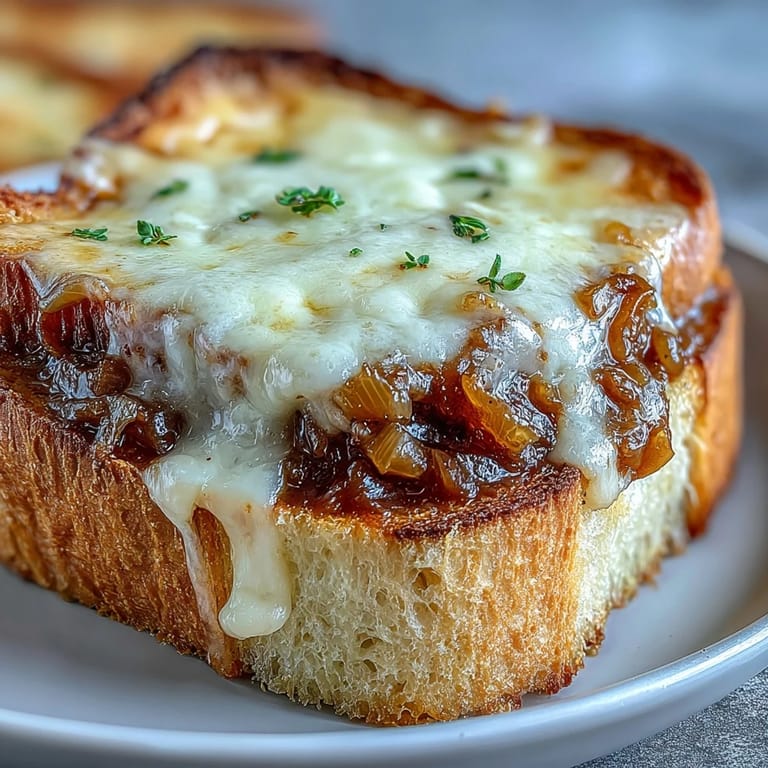
The toasted baguette provides structure and texture, while the Gruyère melts into creamy richness that anchors each spoonful. The broiler step transforms everything—the cheese bubbles and browns, the bread softens just enough to soak up broth without falling apart. This is where patience pays off in the most visible way.
- Gruyère's nutty flavor matters here more than any other cheese—Swiss or Emmental work if necessary, but avoid anything mild or you've lost the soup's identity.
- If your baguette is fresh, cut it and let it sit out overnight so it dries slightly and becomes crunchier when toasted.
- Serve in bowls that can go straight from broiler to table so the cheese stays bubbling when people dig in.
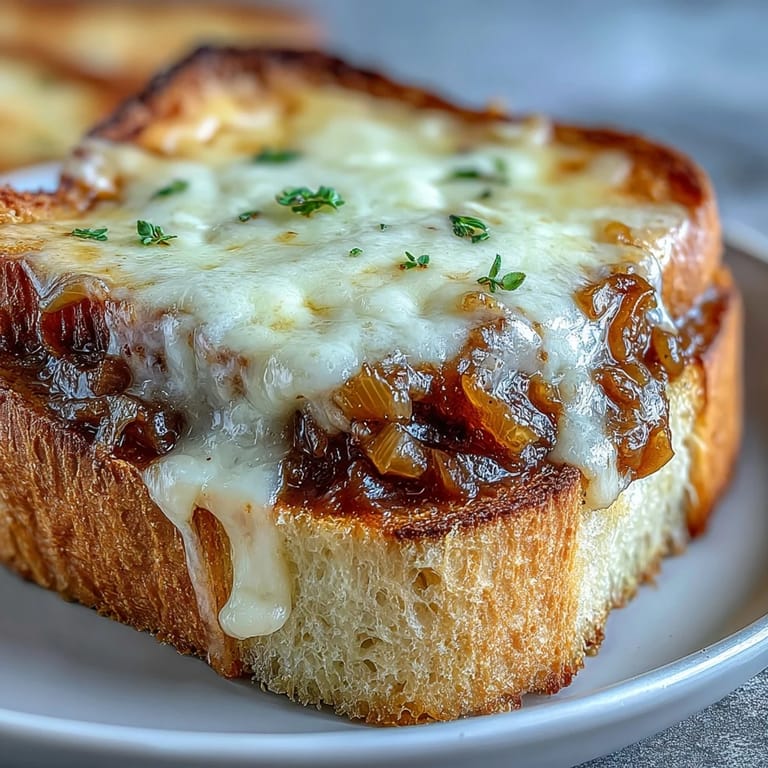 Pin it
  Pin it
 French onion soup feels like something you should never attempt at home, which makes it all the more satisfying when it works. This Dutch oven version removes that intimidation and replaces it with pure comfort.
Recipe FAQs
- → How long does it take to properly caramelize the onions?
Proper caramelization takes 40-45 minutes over medium heat with frequent stirring. This slow process develops the deep, sweet flavor that defines authentic French onion soup. Don't rush this step, as it's essential for the soup's signature taste.
- → Can I make this soup vegetarian?
Yes, simply substitute vegetable broth for beef broth and use a vegetarian Worcestershire sauce alternative or omit it entirely. The caramelized onions provide plenty of depth and flavor even without the beef broth.
- → What cheese can I use instead of Gruyère?
Swiss or Emmental cheese work wonderfully as substitutes. Both melt beautifully and have similar nutty, mild flavors that complement the caramelized onions perfectly.
- → Do I need oven-safe bowls for this soup?
Yes, oven-safe bowls are necessary for the final broiling step where the cheese melts and bubbles on top. If you don't have them, you can toast the bread separately with cheese and place on top of the soup just before serving.
- → Can I prepare the soup ahead of time?
Absolutely. The soup base can be made up to 3 days in advance and refrigerated. Simply reheat, ladle into bowls, add the bread and cheese, and broil just before serving for the best results.
- → Why add sugar to the onions?
The teaspoon of sugar helps jumpstart the caramelization process and enhances the natural sweetness of the onions. It creates a deeper, more complex flavor profile and helps achieve that beautiful golden-brown color.