 Pin it
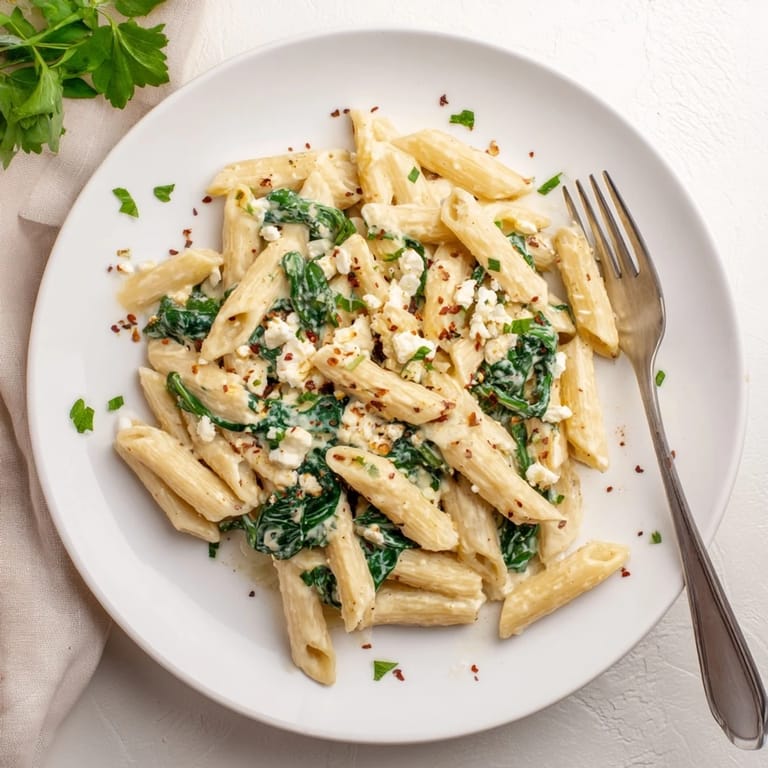
 The first time I made this pasta, I was cleaning out my refrigerator after a long week and found a block of feta that needed using. I tossed everything together without measuring, expecting something edible but not remarkable. When that creamy sauce came together, I literally stopped mid bite and called my friend to tell her I had accidentally discovered dinner magic.
Last winter, my roommate walked in while I was making this and immediately demanded the recipe. We ate it standing over the stove, talking about our days, and ended up polishing off the entire batch between us. Now it is our go to when we need comfort food but want to feel somewhat sophisticated about it.
Ingredients
- 400 g dried pasta: I prefer penne or fusilli because their shapes catch that creamy sauce in every crevice, but spaghetti works beautifully too
- 200 g feta cheese: Use a good quality sheep milk feta if you can find it, it melts into the sauce much better than cheaper varieties
- 150 g baby spinach: Baby spinach is tender enough to wilt quickly without becoming slimy, unlike mature spinach which can be tough
- 2 cloves garlic: Do not be tempted to add more, the feta is already quite pungent and you want balance here
- 3 tbsp olive oil: This is the base of your sauce, so use something you would drizzle on a salad
- 1 tsp black pepper: Feta loves pepper, and the heat cuts through the richness beautifully
- 1/2 tsp chili flakes: Optional, but I almost always add them for that gentle warmth at the back of your throat
- Salt: Be careful with additional salt since feta is naturally quite salty on its own
- Lemon zest and fresh herbs: These brighten everything up, turning a rich pasta into something that feels light and fresh
Tired of Takeout? 🥡
Get 10 meals you can make faster than delivery arrives. Seriously.
One email. No spam. Unsubscribe anytime.
Instructions
- Boil your pasta water:
- Bring a large pot of salted water to a rolling boil, then cook the pasta until it is just al dente, which usually means one minute less than the package suggests
- Reserve the starchy water:
- Before draining, scoop out one full cup of the cloudy pasta water, then drain the pasta in a colander
- Sauté the garlic:
- Heat olive oil in your largest skillet over medium heat, add minced garlic, and let it sizzle for just one minute until you can smell it
- Wilt the spinach:
- Drop in all the spinach and stir constantly for about two minutes until it has completely collapsed into soft, dark green ribbons
- Combine everything:
- Add the hot pasta to the skillet along with the crumbled feta, then pour in about half a cup of that reserved pasta water
- Create the sauce:
- Toss vigorously with a wooden spoon or spatula, watching as the feta melts into the starchy water to form a glossy, creamy coating
- Adjust consistency:
- Add more pasta water a splash at a time if the sauce looks too thick or dry, keeping in mind it will thicken slightly as it cools
- Season and serve:
- Finish with black pepper, chili flakes if using, and salt only after tasting, then plate immediately topped with lemon zest and herbs
 Pin it
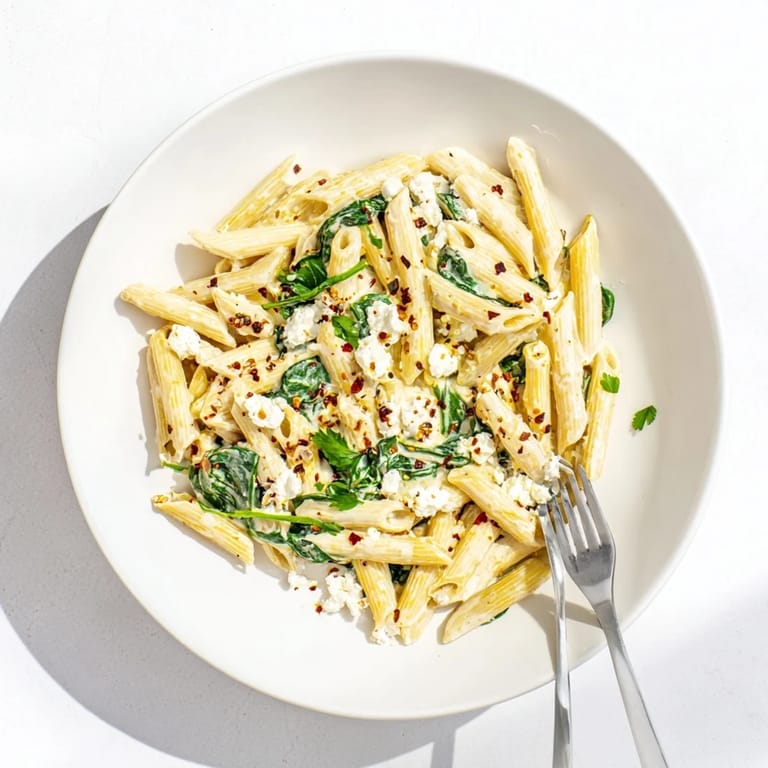
 This recipe has become my secret weapon for unexpected guests because it looks impressive but requires almost no effort. The first time I served it at a dinner party, my friend asked for thirds and then demanded I teach her how to make it the very next weekend.
Choosing Your Feta
I spent years buying those plastic tubs of pre crumbled feta before I realized blocks taste infinitely better and melt more smoothly into sauces. Greek sheep milk feta will give you the creamiest results, but Bulgarian feta works beautifully if you prefer something saltier.
The Pasta Water Trick
That cloudy, starchy water is liquid gold in Italian cooking, and it is absolutely essential here for emulsifying the feta into something saucy rather than clumpy. The starch literally bonds with the cheese fat, creating that restaurant quality texture.
Make It Your Own
Sometimes I add sun dried tomatoes when I want deeper umami notes, or roasted red peppers for sweetness. Arugula works instead of spinach if you prefer that peppery bite, especially in summer when it is fresh from the market.
- Try adding a spoonful of capers for briny depth
- A splash of white wine in the garlic step adds lovely brightness
- Toasted pine nuts sprinkled on top bring wonderful crunch
 Pin it
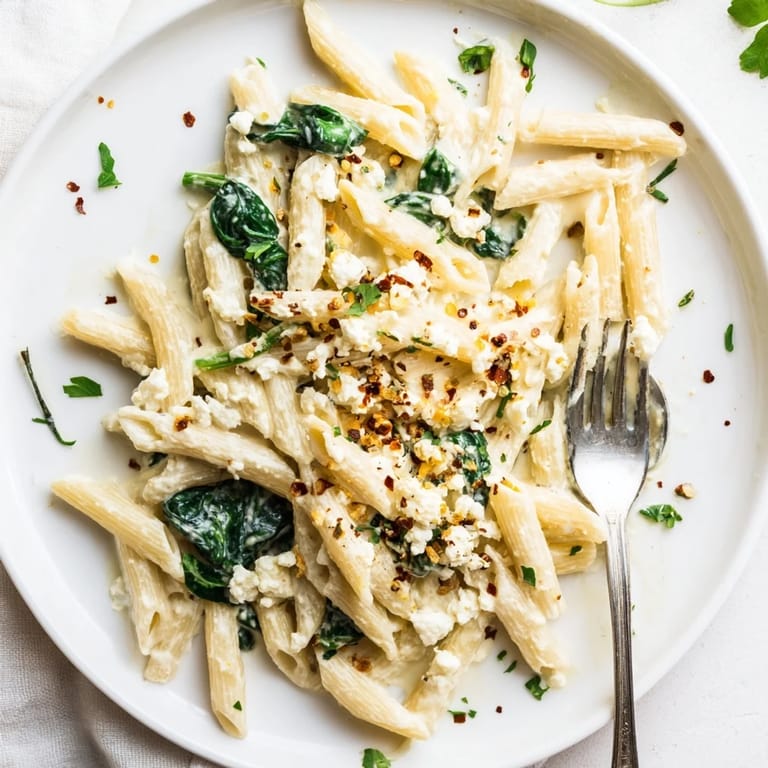
 Some nights the simplest recipes become the ones we return to again and again, and this pasta has earned its permanent place in my weekly rotation.
Recipe FAQs
- → How do I make the sauce creamy?
The creamy sauce forms naturally when crumbled feta melts with hot pasta water. Toss vigorously while adding reserved starchy water until the cheese creates a velvety coating that clings to every piece of pasta.
- → Can I use fresh spinach instead of baby spinach?
Yes, fresh mature spinach works perfectly. Just chop larger leaves into smaller pieces before wilting them in the skillet. Baby spinach is convenient but regular spinach offers the same delicious result.
- → What pasta shapes work best?
Penne and fusilli capture the creamy sauce beautifully in their ridges and curves. Spaghetti creates elegant coated strands. Choose whatever shape you prefer—the sauce adapts wonderfully to any variety.
- → How can I add more protein?
Stir in pan-seared chicken strips, sautéed shrimp, or white beans. Grilled chicken breast pairs exceptionally well with the tangy feta and wilted spinach flavors.
- → Can I make this dairy-free?
Substitute feta with dairy-free feta alternatives or nutritional yeast for umami. Add extra olive oil and pasta water to achieve that luscious, coating texture without dairy.
- → How long does this keep in the refrigerator?
Store in an airtight container for up to 3 days. Reheat gently with a splash of water to revive the creamy sauce. The pasta may absorb more liquid, so add moisture when warming.