 Pin it
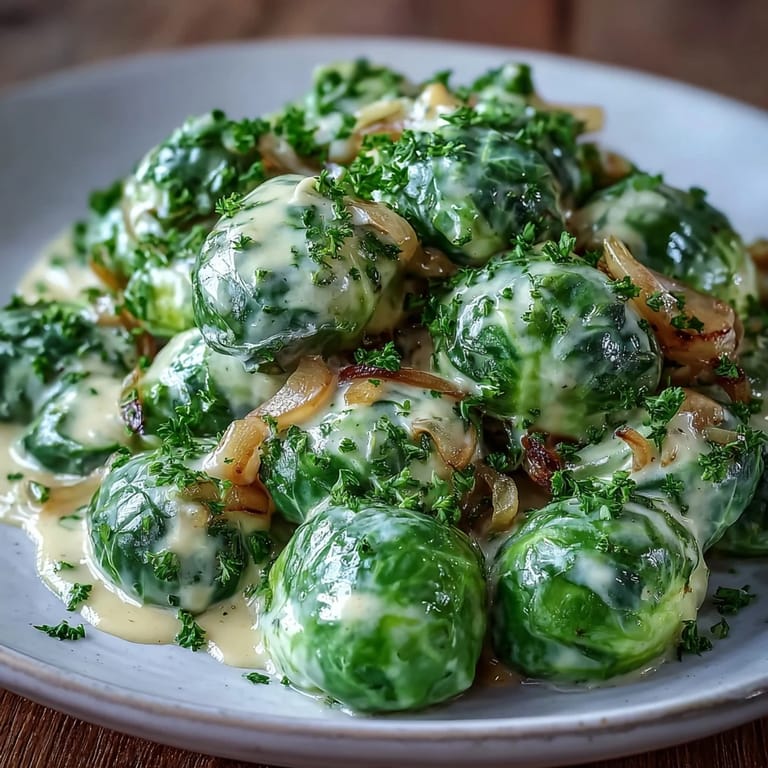
 I was standing at the stove on a Wednesday evening, staring at a bag of Brussels sprouts I'd bought on impulse, when my neighbor knocked to borrow an egg. She glanced at the sprouts and said her grandmother used to smother them in a mustard cream sauce that made even the skeptics come back for seconds. I had cream cheese, I had mustard, and I had nothing to lose. What came out of that skillet twenty minutes later turned a neglected vegetable into something I now crave on cold nights.
The first time I served this to my family, my brother—who once declared Brussels sprouts the enemy—went silent after his first bite. He looked up, nodded slowly, and reached for a second helping without a word. My mom laughed so hard she had to set down her fork. That silence felt like victory.
Ingredients
- Brussels sprouts (600 g, cleaned and trimmed): Choose firm, tight heads with bright green leaves, and trim the stems just enough to remove any woody bits without losing too many outer leaves.
- Onion (1 small, finely chopped): The onion melts into the sauce and adds a subtle sweetness that balances the sharpness of the mustard.
- Garlic clove (1, minced): Fresh garlic is essential here, it blooms in the butter and perfumes the entire dish.
- Fresh chopped parsley: This is your final flourish, a pop of color and a hint of freshness that brightens every bite.
- Cream cheese (150 g): It creates a silky, rich base that coats the sprouts without feeling heavy, and it melts beautifully into the broth.
- Dijon mustard (2 tablespoons): The backbone of the sauce, it brings tang and depth without overpowering the vegetables.
- Vegetable broth (150 ml): Use a good quality broth, it thins the sauce just enough to make it spoonable and adds a savory undertone.
- Butter (2 tablespoons): This is where the flavor starts, butter gives the onions a place to soften and caramelize gently.
- Lemon juice (1 teaspoon): A small squeeze at the end wakes up the entire dish and cuts through the richness.
- Salt and pepper: Taste as you go, the sprouts and the sauce both need seasoning to reach their full potential.
Tired of Takeout? 🥡
Get 10 meals you can make faster than delivery arrives. Seriously.
One email. No spam. Unsubscribe anytime.
Instructions
- Boil the Brussels Sprouts:
- Bring a large pot of salted water to a rolling boil and drop in the trimmed sprouts. Let them cook for 5 to 7 minutes until they are just tender but still hold their shape, then drain them well and set them aside.
- Start the Sauce Base:
- Melt the butter in a large skillet over medium heat and add the chopped onion. Stir occasionally and let them soften for 3 to 4 minutes until they turn translucent and fragrant.
- Add the Garlic:
- Toss in the minced garlic and stir for about a minute, just until the kitchen smells warm and inviting. Do not let it brown or it will turn bitter.
- Build the Creamy Sauce:
- Lower the heat and add the cream cheese and Dijon mustard to the skillet. Stir continuously until the mixture is smooth and fully combined, with no lumps remaining.
- Thin with Broth:
- Slowly pour in the vegetable broth while stirring, letting the sauce loosen into a creamy, pourable consistency. Keep stirring until everything is silky and homogeneous.
- Season to Taste:
- Add salt, pepper, and lemon juice, tasting as you go. The lemon juice should brighten the sauce without making it sour.
- Coat the Sprouts:
- Add the cooked Brussels sprouts to the skillet and gently toss them in the sauce. Let them warm through for 2 to 3 minutes, making sure each sprout is coated evenly.
- Serve and Garnish:
- Transfer everything to a serving dish and scatter fresh chopped parsley over the top. Serve immediately while the sauce is still glossy and warm.
 Pin it
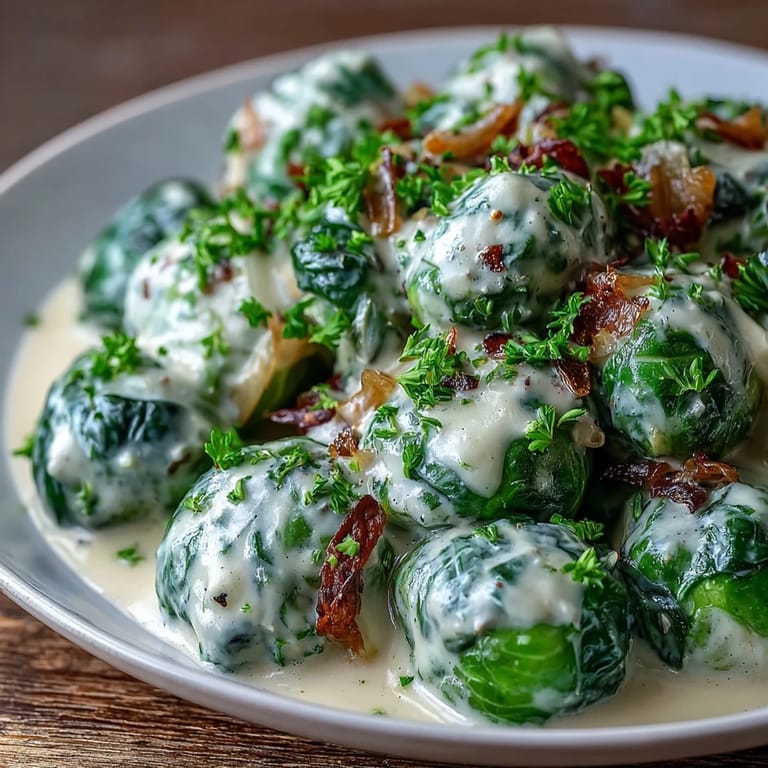
 One Sunday afternoon, I made a double batch of this and brought it to a potluck where it sat next to a tray of roasted chicken. By the end of the meal, the chicken was half gone but the Brussels sprouts were scraped clean. Someone asked for the recipe, and I realized I had finally found a way to make vegetables feel like comfort food.
Serving Suggestions
This dish works beautifully as a side for roasted meats, grilled sausages, or a simple pan-seared chicken breast. It also stands on its own as a light vegetarian main when served over rice, quinoa, or with crusty bread to soak up the sauce. I have even spooned leftovers over baked potatoes and called it dinner.
Storage and Reheating
Store any leftovers in an airtight container in the fridge for up to three days. Reheat gently in a skillet over low heat with a splash of broth or water to loosen the sauce, stirring occasionally until warmed through. The flavors actually deepen overnight, making this an excellent candidate for meal prep.
Variations and Swaps
If you like a bit of heat, stir in a pinch of cayenne pepper or a few red pepper flakes when you add the mustard. You can swap the Dijon for grainy mustard for more texture, or use Greek yogurt in place of half the cream cheese for a tangier, lighter sauce. I have also added crispy bacon bits on top for guests who are not vegetarian, and it disappeared even faster.
- Try whole grain mustard for a rustic, seeded texture in the sauce.
- Add a handful of grated Parmesan at the end for extra richness and umami.
- Toss in toasted walnuts or almonds for crunch and a nutty finish.
 Pin it
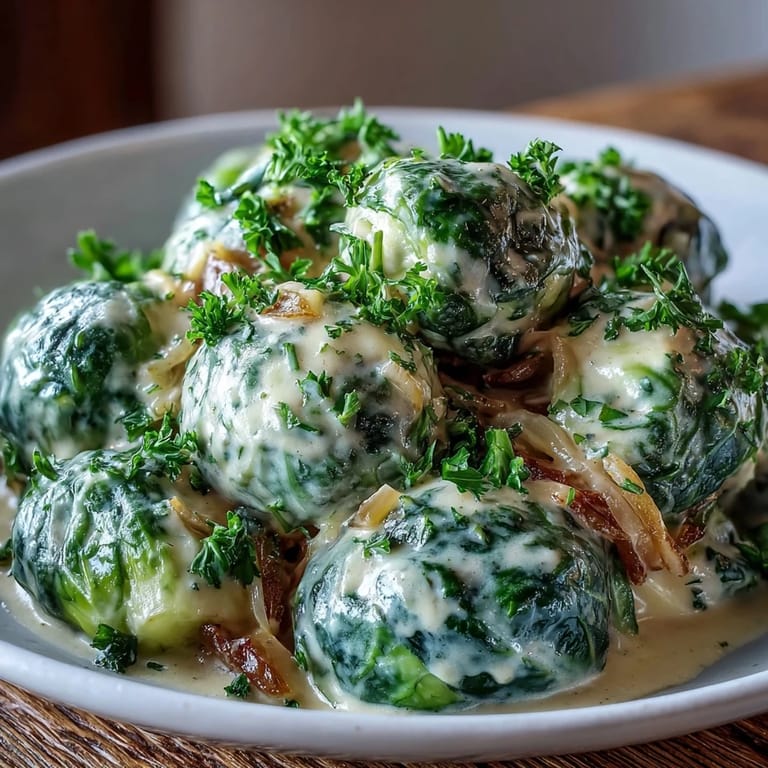
 This recipe taught me that the right sauce can turn skeptics into believers and that Brussels sprouts deserve a second chance. Make it once, and you will find yourself craving it on the coldest, grayest evenings when you need something warm and reliable.
Recipe FAQs
- → Can I use frozen Brussels sprouts instead of fresh?
Fresh Brussels sprouts work best for this dish as they maintain their texture better during cooking. If using frozen, thaw them completely and pat dry before adding to the sauce to prevent excessive moisture from thinning the cream cheese sauce.
- → What can I substitute for the cream cheese?
Greek yogurt or sour cream can replace cream cheese, though they'll create a thinner sauce. For a dairy-free option, try full-fat coconut milk or cashew cream, adjusting the liquid quantity to maintain the desired consistency.
- → How far ahead can I make this dish?
This preparation keeps well for up to 3 days when refrigerated in an airtight container. Reheat gently on the stovetop over low heat, adding a splash of vegetable broth or water to restore the sauce's creamy texture.
- → Can I make this vegan?
Substitute vegan cream cheese and butter alternatives, then use a plant-based vegetable broth. The sauce will still achieve a velvety consistency, though the flavor profile may shift slightly depending on your dairy-free choices.
- → What other vegetables work in this cream cheese-mustard sauce?
This versatile sauce pairs beautifully with cauliflower, broccoli, green beans, or roasted root vegetables like carrots and parsnips. Adjust cooking times accordingly based on the vegetable's density and desired tenderness.
- → How can I add more protein to make this a complete meal?
Stir in white beans, chickpeas, or cubed tofu during the final minutes of cooking. Crispy bacon bits or pan-seared chicken pieces also complement the creamy mustard sauce wonderfully if you're not maintaining a vegetarian diet.