 Pin it
 The kitchen was freezing that January afternoon, but the oven was already warming the whole house. I had a beautiful chuck roast sitting on the counter, marbled and ready, and I knew it was going to be one of those meals that made everyone linger at the table. My grandmother used to make pot roast every Sunday, but I never paid much attention until I had my own family to feed. Now, the smell of browning beef and red wine simmering with herbs brings back every loud, chaotic dinner I grew up with.
I made this for my in laws the first time they visited our new place. I was nervous because my mother in law is known for her pot roast, and I didnt want to disappoint. But when she took her first bite and smiled, then asked for the recipe, I knew Id done something right. That night, we laughed over wine and second helpings, and the roast became my go to for anyone I want to impress without looking like Im trying too hard.
Ingredients
- Beef chuck roast: The marbling is key here, it melts into the meat as it braises and keeps everything juicy and flavorful instead of dry.
- Kosher salt and black pepper: Season generously, the beef needs bold flavor before it even hits the pot.
- All purpose flour: A light dusting helps the sear develop a deep crust and later thickens the gravy naturally.
- Olive oil and butter: The combination gives you a higher smoke point and adds richness to the browning process.
- Yellow onion: Thick wedges hold up during the long braise and turn sweet and soft, adding body to the sauce.
- Garlic: Smashed cloves release their flavor slowly and become mellow and buttery after hours in the pot.
- Carrots and celery: These classic aromatics soak up the braising liquid and add a slight sweetness that balances the savory beef.
- Baby potatoes: They become creamy on the inside and stay intact, perfect for soaking up all that luscious gravy.
- Tomato paste: Browning it in the pot adds a deep, caramelized umami layer that you cant get any other way.
- Red wine: It deglazes the pan and adds acidity and complexity, but you can swap it for extra broth if you prefer.
- Beef broth: Low sodium is best so you control the salt level, and it becomes the base of your silky gravy.
- Worcestershire sauce: Just a splash adds tangy depth and rounds out all the other flavors.
- Fresh rosemary, thyme, and bay leaves: These herbs infuse the broth with earthy, aromatic warmth that makes the whole dish feel special.
- Cornstarch slurry: Optional, but it gives you a glossy, restaurant style gravy if you like yours thick.
- Fresh parsley: A handful of chopped parsley at the end brightens everything up and adds a pop of color.
Tired of Takeout? 🥡
Get 10 meals you can make faster than delivery arrives. Seriously.
One email. No spam. Unsubscribe anytime.
Instructions
- Preheat and prep the beef:
- Set your oven to 300 degrees F if youre using the oven method. Pat the roast completely dry with paper towels, then season it all over with salt and pepper, and dust it lightly with flour, shaking off the excess.
- Sear the roast:
- Heat the oil and butter in your Dutch oven over medium high heat until shimmering, then sear the roast for four to five minutes per side until its deeply golden brown, including the edges. Transfer it to a plate and dont skip this step, its where all the flavor starts.
- Cook the aromatics:
- Lower the heat to medium, add another tablespoon of oil if the pot looks dry, then toss in the onion wedges and cook until softened and golden, about three to four minutes. Stir in the garlic and cook just until fragrant, about thirty seconds.
- Build the braising liquid:
- Add the tomato paste and let it cook for a minute or two until it darkens and smells sweet. Pour in the red wine and scrape up all those browned bits stuck to the bottom, let it simmer for two to three minutes to reduce slightly.
- Add broth and herbs:
- Stir in the beef broth and Worcestershire sauce, then add the rosemary, thyme, and bay leaves. Nestle the roast back into the pot along with any juices from the plate, the liquid should come about halfway up the meat.
- Braise low and slow:
- Bring everything to a gentle simmer, cover tightly with a lid, then either reduce the heat to low on the stovetop or transfer the whole pot to the oven. Let it cook undisturbed for one and a half hours.
- Add the vegetables:
- Carefully flip the roast over, then tuck the carrots, celery, and potatoes around it, pushing them into the liquid. Cover again and cook for another one and a half to two hours, until the beef is fork tender and the vegetables are soft but still hold their shape.
- Rest and thicken the gravy:
- Transfer the roast and vegetables to a serving platter and tent with foil to keep warm. Skim off any excess fat from the surface of the liquid, then bring it to a simmer and stir in the cornstarch slurry if you want a thicker gravy, cooking for two to three minutes until glossy.
- Serve:
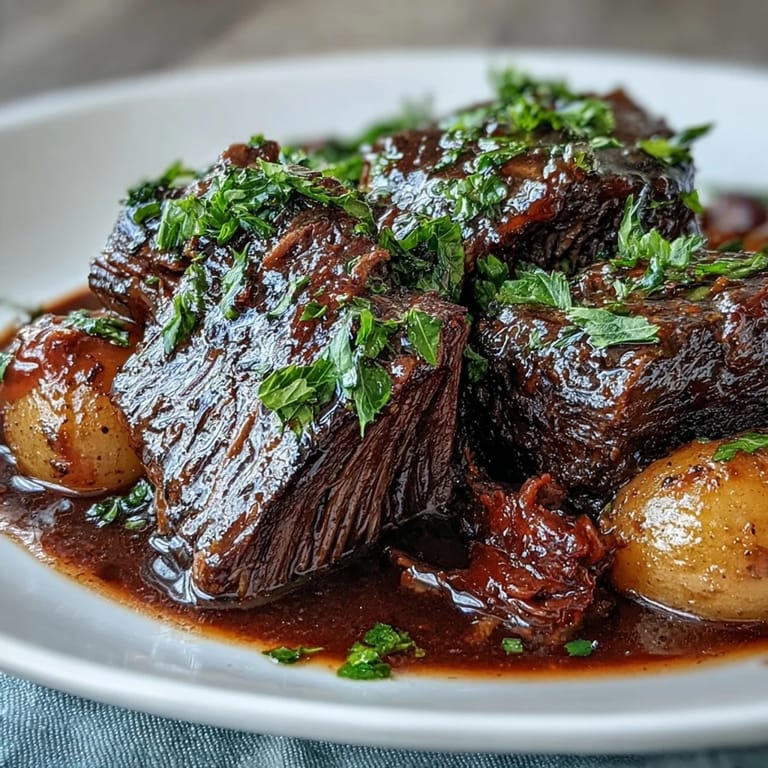
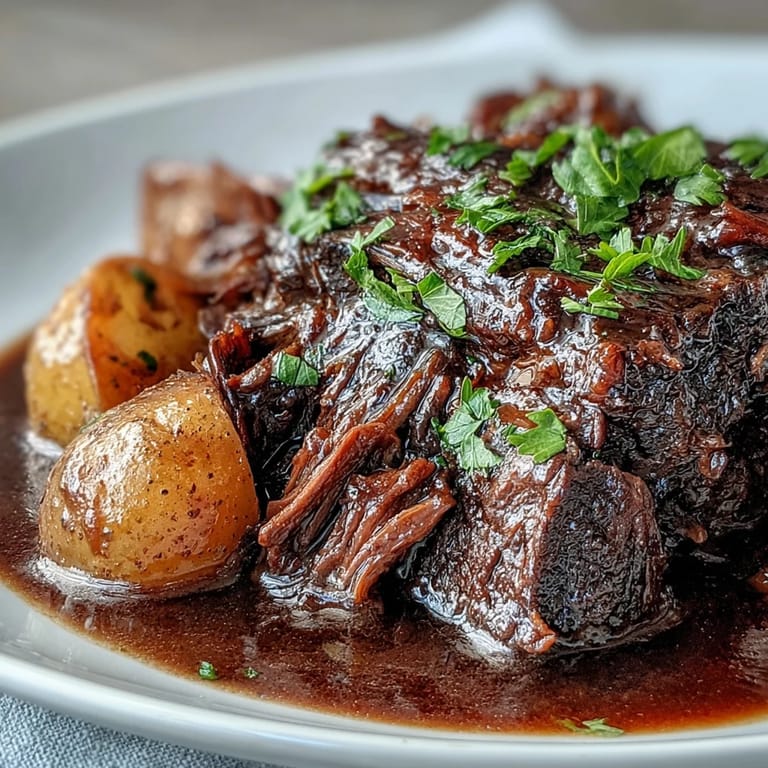
- Remove the herb stems and bay leaves, then either shred the beef into large chunks or slice it against the grain. Arrange it over the vegetables, spoon the gravy generously over everything, and garnish with fresh parsley before serving hot.
 Pin it
 One winter evening, my daughter came home from college for the weekend and asked if I could make the pot roast. She said it was the one thing she missed most about being home. We sat around the table with candles lit, snow falling outside, and she told us stories about her new friends while we passed around the gravy boat. It wasnt fancy, but it was perfect, and I realized this dish had become more than dinner, it was a reason to come home.
How to Get the Best Sear
Make sure your roast is completely dry before it hits the pan, any moisture will steam instead of brown. Heat your oil until it shimmers but doesnt smoke, and resist the urge to move the meat around. Let it sit undisturbed for a full four to five minutes per side so a dark, flavorful crust forms. If your pot isnt big enough, sear in batches or use a separate skillet, then transfer everything to your Dutch oven. The fond left behind is liquid gold, so scrape every bit of it up when you deglaze.
Choosing the Right Cut of Beef
Chuck roast is ideal because its well marbled and becomes incredibly tender with slow cooking. Blade roast works just as well and sometimes has even more marbling. Avoid lean cuts like sirloin or round, they dry out during the long braise and wont give you that melt in your mouth texture. Look for a roast thats at least three pounds so it stays moist, and dont trim all the fat, it renders down and flavors the gravy. If you can, ask your butcher for a roast thats evenly thick so it cooks uniformly.
Storing and Reheating Leftovers
Pot roast tastes even better the next day after the flavors have had time to meld. Store the beef and vegetables in an airtight container with plenty of gravy to keep everything moist, and refrigerate for up to four days. Reheat gently on the stovetop over low heat, adding a splash of broth if the gravy has thickened too much. You can also freeze portions for up to three months, just thaw overnight in the fridge before reheating.
- Shred leftovers for hearty tacos with pickled onions and cilantro.
- Pile sliced beef onto crusty rolls with melted provolone for incredible hot sandwiches.
- Serve over creamy polenta or buttered egg noodles for an easy weeknight dinner.
 Pin it
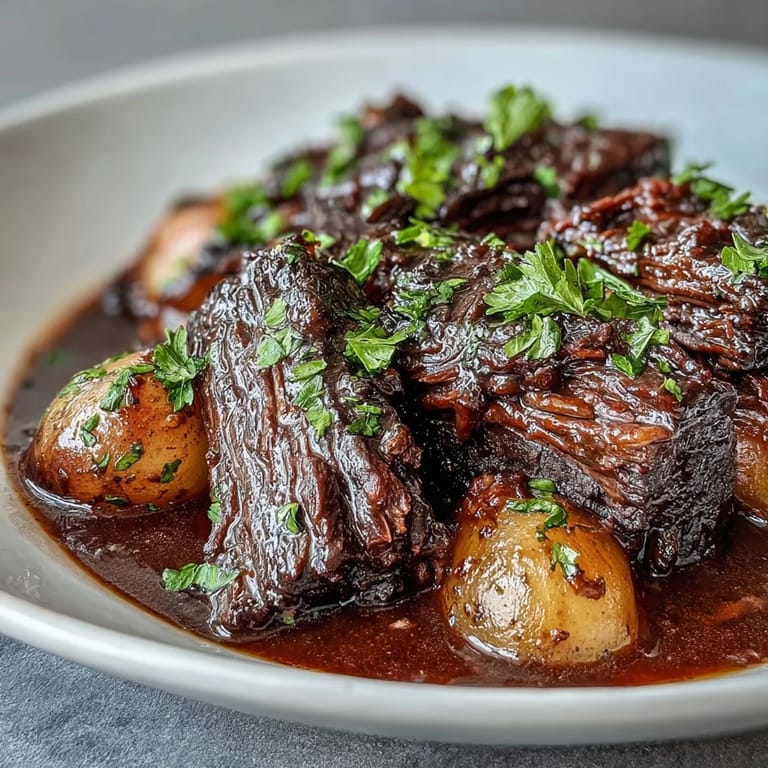
 This pot roast has become my cold weather tradition, the kind of meal that turns an ordinary Sunday into something worth remembering. I hope it brings as much warmth to your table as it has to mine.
Recipe FAQs
- → What cut of beef works best?
Chuck roast or blade roast with good marbling is ideal. The connective tissue breaks down during braising, creating tender meat.
- → Can I make this in a slow cooker?
Yes. After searing the beef and sautéing aromatics, transfer everything to a slow cooker. Cook on low for 8–10 hours or high for 5–6 hours.
- → How do I get thicker gravy?
Simmer the cooking liquid and whisk in a cornstarch slurry (cornstarch mixed with cold water). Cook for 2–3 minutes until thickened.
- → Can I use wine instead of broth?
Use a combination of both for balance. All wine may be too acidic; all broth lacks depth. Half wine, half broth works beautifully.
- → Why is my beef tough?
Undercooking is usually the culprit. Pot roast needs time—connective tissue requires 3+ hours of gentle braising to break down completely.
- → Can I prepare this ahead?
Yes. Cool completely, refrigerate, and reheat gently the next day. The flavors deepen and fat can be easily removed from the surface.